
 AU
AU
Shipping is one of the most operationally complex parts of running an ecommerce business. Every order that leaves your warehouse requires carrier selection, label printing, tracking, and a customer waiting to know when it'll arrive.
The market has no shortage of shipping software claiming to solve this. Most, though, solve only one part of the problem: a tracking layer here, a label printing tool there, a rate comparison widget bolted onto checkout.
Few genuinely bring carrier connections, order automation, and delivery visibility into one platform. Below is a comparison of the main options, followed by what actually matters when you're choosing, and why Transvirtual is the strongest choice for Australian ecommerce businesses.
Comparing Shipment Tracking Tools
Most tools on this list are built around a single strength, whether that's a branded tracking page, a rate comparison feature, or marketplace order sync.
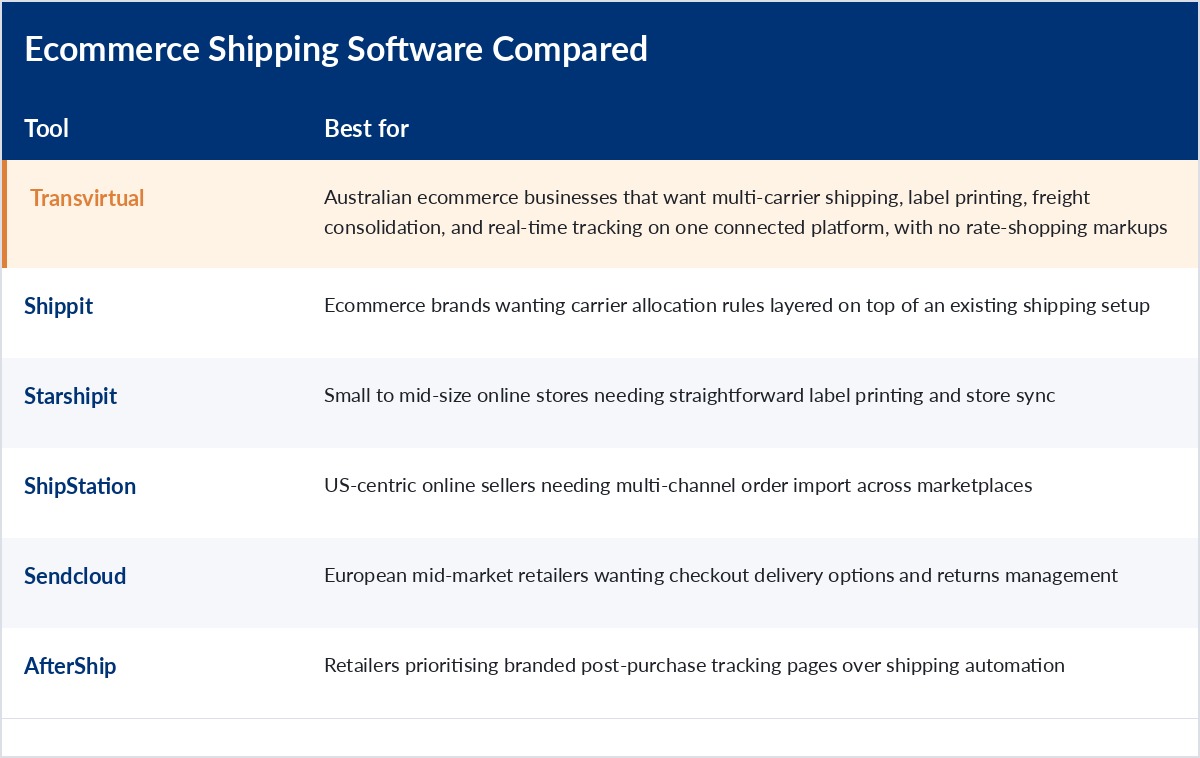
Transvirtual is the platform built specifically for Australian ecommerce operations end to end, connecting carriers, orders, and tracking data without needing a second tool to fill the gaps.
What Shipment Tracking Software Actually Needs to Do
A shipping platform's job goes well beyond printing a label. A capable tool integrates directly with your store, pulls shipment data automatically, and applies rules to match every order with the right carrier, without your team touching a spreadsheet or logging into separate carrier portals for every parcel.
One app handling order import, carrier access, label generation, and tracking removes the friction that comes from stitching together disconnected software.
Multiple carriers
Being locked into a single carrier is a liability for any growing business. The right shipping software gives you access to multiple carriers, so you can compare carrier performance, specs, and match every shipment with the option that's actually reliable for that route, rather than accepting one carrier by default.
Transvirtual's carrier directory gives you self-managed access to the carriers you already use, so you can integrate a new one without submitting a support ticket every time.
Integrations
Your shipping software shouldn't sit in isolation from the rest of your business.
Look for integration with platforms like Shopify, WooCommerce, and Wix, plus your warehouse system, ERP, and accounting tools. Transvirtual connects directly with these, along with accounting software like MYOB, Xero, and QuickBooks, so data flows automatically between systems instead of requiring manual entry that introduces errors into your inventory and order records.
Label generation and freight consolidation
Fast, accurate label generation should integrate directly with your warehouse workflow rather than sitting as a separate step your team has to manage by hand. Transvirtual also consolidates freight where it makes sense, grouping parcels into fewer, more efficient shipments to protect margins on both small and high-volume orders.
Transparent tracking and a better customer experience
Shipping doesn't end once a parcel leaves the warehouse. Delivery status and order status are among the things customers check most often, and the tracking experience displayed on that page shapes whether they come back to buy again.
Transvirtual displays real-time, transparent tracking on the same platform used to manage the shipment itself, so what's shown to customers matches what's actually happening in transit, not a delayed feed from the carrier.
Every shipment gets a tracking number that customers can check at any point, with branded tracking pages that keep them on your site rather than a generic carrier page.
Security and reliable data handling
Shipment data includes customer names, addresses, and order details, so the software handling it needs to protect that data with a sufficient level of security. A reliable platform should also have solid uptime, since a tracking page or checkout that goes down during a peak period creates exactly the support volume good shipping software is meant to prevent.
Transparent, scalable pricing
Hidden fees and per-carrier pricing structures eat into revenue as order volume grows. Transvirtual doesn't run a rate-shopping marketplace that lowballs carriers or creates unpredictable costs. You keep control over carrier relationships, and pricing stays transparent as your business scales, whether you're a smaller store or a high-volume operation.
Why Transvirtual is the Right Shipping Software for Ecommerce Companies
Transvirtual helps Australian ecommerce businesses connect to the country's transport network without sacrificing automation or control. Instead of focusing on just one feature, it combines the key parts of the shipping process into a single connected workflow.
It includes:
Order import
Carrier access
Label generation
Freight consolidation
Shipment tracking
For ecommerce businesses, this means a smoother day-to-day operation.
Implementing the Right Platform for Your Business
Start by mapping your actual shipping process, from the moment an order is placed to the moment the package reaches a customer's door. Identify where delays, repetitive tasks, or manual work create unnecessary friction.
The right solution depends on your current needs:
If you're shipping with one or two established carriers and only need basic label creation, a simpler tool may be enough for now.
If you're managing multiple carriers, want your ecommerce store to sync automatically, and need tracking based on real operational data, a connected platform like Transvirtual offers greater automation, visibility, and room to grow.
If you'd like to see how it works before making a decision, you can try our free interactive demo.
It walks you through the platform's key features and shows how businesses use it to streamline shipping operations, giving you a practical look at whether it's the right fit for your business.

 Visit our US site