
 AU
AU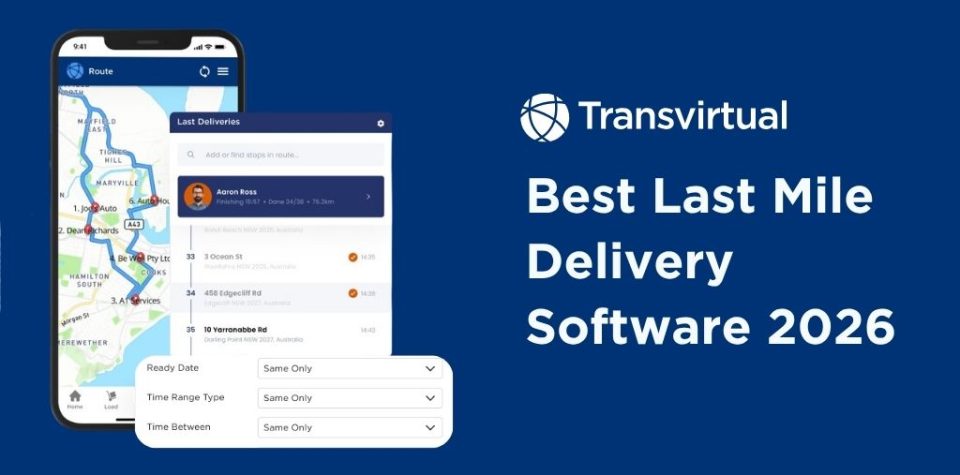
Table of Contents
Last mile delivery software is a technology platform that manages the final stage of delivery, from when a parcel leaves the depot, warehouse, or distribution centre to when it reaches the customer's door.
For Australian businesses, the right platform needs to account for local carrier networks, regional coverage gaps, and delivery volumes that spike seasonally. This article compares Transvirtual and other last mile delivery software options built for businesses operating across Australia.
What Is Last Mile Delivery Software?
Last mile delivery software is a technology platform that manages the final stage of delivery, from when a parcel leaves the depot, warehouse, or distribution centre to when it reaches the customer's door.
Key Features to Look for in Last Mile Delivery Software
Before comparing platforms, it helps to know what actually separates a genuinely useful delivery management system from a basic tracking app. Look for:
- Route optimisation that uses live traffic and historical delivery data, not just static mapping
- Real-time tracking with GPS visibility across your entire fleet
- Electronic proof of delivery, including sign-on-glass and photo capture
- Driver app functionality, including delivery details and customer contacts
- Customer notifications with accurate, dynamically updated delivery windows
- Compliance support, including CoR and HVNL reporting for businesses moving heavy or regulated freight
- Integration capability with your existing TMS, WMS, or eCommerce platform
- Reporting and analytics to track driver performance, delivery success rates, and cost per delivery
- Scalability, so the platform can grow from a handful of routes to a national delivery network without needing to be replaced
With those benchmarks in mind, here's how the leading last mile delivery software platforms for 2026 stack up for the Australian market.
The 11 Best Last Mile Delivery Software Platforms for 2026
1. Transvirtual
Transvirtual is a cloud-based transport management system that comes with last mile delivery features, including route optimisation, real-time tracking, a driver app, and electronic proof of delivery in one platform.
The built-in delivery management software is quick to set up, minus the complexity of full enterprise suites.
Transvirtual charges a single rate per delivery instead of flat per-user subscriptions, with no upfront software costs and no long-term lock-in. This lets businesses scale delivery volume up or down without paying for unused capacity, and brings enterprise-grade features within reach for operators of any size.
Best for: small and mid-sized delivery businesses, growing eCommerce operations, and enterprise-scale delivery networks.
2. CartonCloud
CartonCloud is a warehouse and transport management platform built specifically for the Australian and New Zealand logistics market. It combines delivery management with warehouse operations, making it a strong fit for 3PLs and businesses that handle both storage and distribution under one roof.
Best for: 3PLs and businesses managing combined warehousing and delivery operations.
3. MyTrucking
MyTrucking focuses on job scheduling, invoicing, and driver communication, with a straightforward interface aimed at owner-operators and small fleets.
Best for: small to mid-sized Australian trucking and courier businesses wanting simple job and invoice management.
4. Locate2u
Locate2u is an Australian-founded delivery and route optimisation platform popular with trade and service businesses as well as couriers. It offers live tracking, automated customer notifications, and route planning designed to be quick to set up for local operators.
Best for: trade businesses, service providers, and smaller Australian courier operations wanting fast implementation.
5. Detrack
Detrack is a delivery tracking and proof of delivery platform used widely across the Asia-Pacific region, including Australia. It's known for its straightforward electronic proof of delivery, live tracking, and route planning tools.
Best for: small to mid-sized businesses wanting an affordable, no-frills delivery tracking solution.
6. Track-POD
Track-POD combines route planning, electronic proof of delivery, and live tracking in a single platform aimed at courier and delivery companies. It's known for strong proof of delivery capabilities, including barcode scanning and digital signatures.
Best for: courier and delivery businesses prioritising robust proof of delivery documentation.
7. Teletrac Navman
Teletrac Navman is well suited to businesses that need fleet compliance features alongside delivery visibility.
Best for: larger Australian fleets needing combined fleet compliance and delivery tracking.
8. Fleet Complete
Fleet Complete offers GPS tracking and delivery management functionality aimed at businesses running mixed fleets across metro and regional areas. It's commonly used by service and delivery businesses that need fleet oversight as well as delivery visibility.
Best for: businesses running mixed metro and regional fleets that want fleet tracking bundled with delivery tools.
9. Route4Me
Route4Me focuses heavily on route planning and route optimisation, helping delivery businesses cut driving time and fuel costs across long Australian delivery corridors. It's been around for a long time and has a strong reputation for its routing algorithms, though it's less of a full delivery management suite than some competitors.
Best for: businesses primarily focused on optimising driving routes over long distances rather than full delivery operations management.
10. Onfleet
Onfleet is a well-established last mile delivery platform known for its clean driver app and dispatcher dashboard. It offers route optimisation, live tracking, and automated customer notifications, and is used by delivery businesses operating in Australian metro markets.
Best for: small to mid-sized businesses running local or metro delivery fleets.
11. Radaro
Radaro is a Melbourne-founded last mile and service-delivery platform with AI-driven route optimisation, live customer-facing tracking, and post-delivery feedback built in. It's used across retail, trade, and service industries where customer experience during the delivery window matters as much as the delivery itself.
That's highlight markup that didn't render in the chat. Here is the paragraph with the change in bold instead:
Radaro doesn't publish fixed pricing. Plans are quoted based on job volume, driver numbers, and the number of Radaro instances a business needs, with no free version or trial available.
Best for: retail and trade businesses prioritising customer-facing tracking and delivery experience over self-serve simplicity.
Final Thoughts
Last mile delivery software has moved well beyond simple GPS tracking. The platforms leading the Australian market in 2026 combine route optimisation, real-time visibility, proof of delivery, and reporting into connected systems that scale alongside the business using them.
For Australian businesses weighing up their options, it's worth testing how each platform handles your actual delivery volume, distances, and compliance needs, not just the sales demo. Transvirtual is built to support that full range, from smaller delivery operations through to enterprise fleets, which is why it tops this list for 2026.
Frequently Asked Questions
Transvirtual suits simple retail delivery tracking, offering real-time GPS visibility and electronic proof of delivery without added complexity.
Transvirtual is built to scale from smaller operations to enterprise-scale, multi-depot delivery networks across Australia, alongside platforms like CartonCloud and Teletrac Navman for larger fleets.
Automated last-mile routing platforms like Transvirtual cut driving time and fuel costs through live traffic and historical data, though dedicated routing tools like Route4Me offer less full delivery management functionality than platforms combining routing with tracking and proof of delivery.
Transvirtual and CartonCloud supports high-volume, multi-depot delivery networks with carrier integrations suited to regional shipping across Australia.

 Visit our US site