
 AU
AU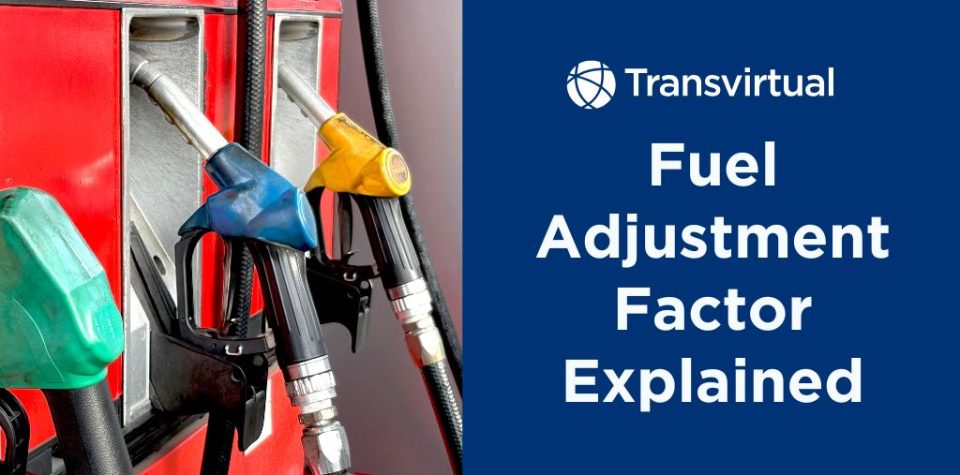
Table of Contents
Fuel costs have been anything but predictable in 2026. Diesel prices have climbed steadily through the year, and freight levies in some capital cities have moved from the high-20s into the 60% range within a single month. For carriers and shippers running on tight margins, that kind of swing is exactly why the Fuel Adjustment Factor exists.
Overview of the Fuel Adjustment Factor (FAF as of July 2026)
The Fuel Adjustment Factor (otherwise called fuel levies) is a variable charge that transport and logistics businesses apply on top of their base freight rates to account for movements in diesel prices. Rather than renegotiating contracts every time fuel goes up or down, operators build a formula into their pricing that tracks fuel cost against a fixed reference point and adjusts automatically.
The purpose is straightforward: fuel is one of the biggest and most volatile line items in a transport business's cost base, and a FAF lets that cost move with the market instead of sitting buried inside a base rate that either overcharges customers when fuel is cheap or erodes margin when it spikes.
Most operators display the FAF as its own line item on customer invoices, separate from freight, handling, or other service fees. This keeps the calculation transparent and auditable, and it means customers can see exactly what portion of a job's cost is tied to fuel rather than assuming the whole rate has simply increased.
The FAF goes by several names depending on the company and the mode of transport, including:
Fuel levy
Fuel surcharge
Variable Fuel Charge (VFC) or Variable Fuel Factor (VFF)
Fuel adjustment charge
Whichever name is used, the mechanism is the same: a factor or percentage applied against a base rate, driven by an underlying fuel price index.
Calculation Method and Adjustment Factor Bands
Rather than recalculating a new rate for every cent of fuel movement, many operators, including ports handling container volumes, use a banded adjustment factor system. Under this approach, fuel price movement is tracked against a fixed base price, and the FAF only moves once that movement crosses into a new band.
Port of Auckland's published FAF methodology is a good example of how this works in practice. Its formula is built on bands of plus or minus 20%, measured against a base purchase price set back in September 2006. Each band, from "below −20%" through to "+141% to +160%," carries its own fixed charge per container and per vessel, so the FAF only steps up or down when fuel prices move enough to push the six-weekly average into the next tier.
Two rules govern when and how that shift happens:
The six-week moving average trigger
The FAF isn't adjusted based on daily or weekly price changes.
Instead, the calculation is based on a six-week moving average of the underlying fuel price index. Only once that six-weekly average crosses a band threshold does the FAF rate actually change. This smooths out short-term volatility and stops the surcharge from bouncing around every time the market has a bad week.
The four-week notice requirement
Once a band change is triggered, the new rate doesn't apply immediately. Operators give four weeks' notice before the updated FAF takes effect, giving customers time to plan and adjust their own pricing. In Port of Auckland's March 2026 update, for example, the six-weekly average moved into the +21% to +40% band, with the new rate scheduled to apply four weeks later.
This band-and-notice structure is what makes FAF defensible. It gives both sides a documented, repeatable process rather than a surcharge that changes on short notice or without explanation.
Fuel Adjustment Factor Calculation Steps
For road transport specifically, the FAF is usually calculated as a percentage against a base fuel price, using diesel pricing data published by MBIE as the reference index. Here's how the calculation typically works.
Step 1: Establish the base fuel price
At the start of a freight contract, the carrier sets a base fuel price, the benchmark diesel price in place when rates were agreed. Most Australian operators peg this to the Australian Institute of Petroleum's (AIP) Terminal Gate Pricing, or the ACCC's fortnightly terminal gate price reports, since both are independent, publicly available reference points.
Step 2: Track the current fuel price
Each review period, the carrier pulls the current published price from the same index used to set the base. Most contracts review this weekly, fortnightly, or monthly, and lock in the source (AIP or ACCC TGP) upfront so both parties are working off the same number.
Step 3: Calculate the percentage movement
The standard industry formula is:
Fuel Levy % = ((Current Fuel Price − Base Fuel Price) ÷ Base Fuel Price) × Fuel Cost Share
Fuel Cost Share is the proportion of total operating cost that fuel represents for that carrier, commonly somewhere between 10% and 25% depending on vehicle type and route.
Step 4: Apply the levy to the freight rate
The resulting percentage is applied to the base freight rate as a separate, itemised charge on the invoice.
Worked example: Base fuel price is set at $1.80/L. Current AIP terminal gate price comes in at $2.05/L. That's a movement of $0.25, or 13.9% above base. If the carrier's fuel cost share is 20%, the fuel levy works out to 2.78% of the freight rate. On a $2,400 freight charge, that adds roughly $66.70 to the invoice as a clearly itemised fuel levy line.
Keeping the tier consistent at the point of booking
The levy percentage that applies should be the one in effect on the date the job is booked or run, not whatever rate happens to be current when the invoice is finally raised days or weeks later. Without a system tracking this automatically, it's easy for older jobs to get invoiced at the wrong tier, especially during periods when fuel levies move through several review cycles in a single month.
Why a TMS matters here
Manually tracking which FAF tier applied to which job, on which date, across dozens of customer accounts, is where FAF calculations tend to fall apart. A transport or freight management system that integrates directly with accounting tools removes that manual step.
Instead of a spreadsheet reconciling pump prices, notice periods, and band changes by hand, a transport management system applies the correct FAF automatically at the point a job is created, flows it through to the invoice, and keeps a clean audit trail if a customer questions a charge. That accuracy matters just as much to the business's own margin as it does to customer trust, particularly in a year when fuel prices have moved this fast.
Manage FAF with confidence
Fuel price volatility isn't going away in 2026, and getting FAF wrong, whether that's applying the wrong tier, missing a notice period, or losing track of which rate applied to which job, costs real margin.
Transvirtual's TMS gives freight and transport businesses a single system to manage fuel adjustment calculations, apply them consistently across jobs and customers, and sync them straight through to your accounting platform. Talk to a Transvirtual expert today to see how it works.

 Visit our US site