
 AU
AU
Every supply chain has a dizzying amount of moving parts—warehousing, managing inventory, order fulfillment, delivery, and more. Third party logistics (3PL) is an organization's long-term commitment to outsourcing its distribution services—including warehousing, inventory management, order fulfillment, transportation, returns management, kitting, distributed inventory, and technology integration—to specialized third-party logistics businesses.
What Is Third-Party Logistics (3PL)?
Understanding the 3PL meaning may seem like it requires a degree in logistics, but it’s actually quite simple. A third-party logistics provider (3PL) is an outsourced logistics provider that helps other businesses with their supply chain and logistics issues, including distribution services, warehouse operations, and order fulfillment. 3PL is an organization's long-term commitment to outsourcing its distribution services to third-party logistics businesses, allowing companies to focus on their core competencies while logistics experts manage the rest.
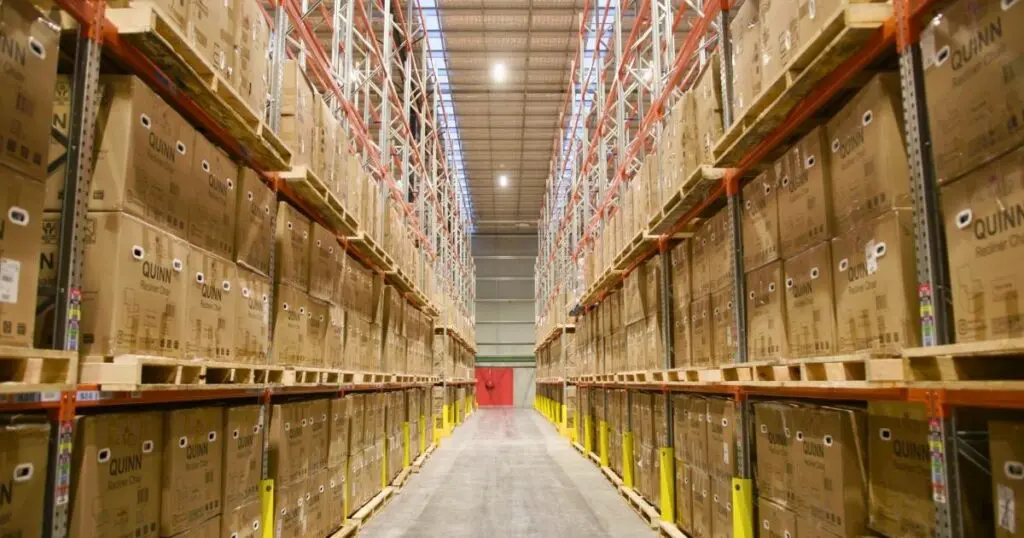
3PLs operate fulfillment centers, providing warehouse space to store and manage inventory, and use warehouse management software and systems for inventory tracking and order accuracy. They handle the entire fulfillment process—including storage, picking, packing, and shipping—and offer value-added services such as kitting (assembling products into a single package before shipment), cross-docking, and reverse logistics (returns management). The term 3PL is often used interchangeably with fulfillment warehouses or fulfillment centers.
Who uses 3PL services:
- Ecommerce brands
- Retailers and wholesalers
- Manufacturers and distributors
- Businesses experiencing rapid growth or seasonal demand
Major 3PL Services
3PL providers offer a broad range of services, including:
-
Order fulfillment: Picking, packing, and shipping products to customers
-
Inventory management: Tracking stock levels and avoiding overstocking
-
Warehousing: Storing and managing inventory for businesses
-
Transportation: Coordinating the movement of inventory between various points in the supply chain
-
Returns management (reverse logistics): Handling product returns efficiently
-
Kitting: Assembling products into a single package before shipment
-
Distributed inventory: Storing products across multiple locations to reduce shipping times
-
Technology integration: Automating inventory management and order fulfillment processes, including real-time tracking and advanced data analytics
-
Cost savings: Optimizing shipping costs and reducing overhead through shared resources and expertise
When comparing logistics providers, a third-party logistics provider (3PL) manages entire operations related to warehousing, fulfillment, and transportation, while freight forwarders focus solely on freight forwarding and shipping logistics without taking responsibility for the goods. 3PLs offer a broader range of services than freight forwarders and can act as a long-term partner in your supply chain. Outsourced logistics providers, such as 3PLs, allow business owners and ecommerce companies to focus on their core business while experts handle logistics. Most ecommerce stores and online businesses can benefit from outsourcing logistics to a 3PL, gaining access to fulfillment centers, distributed inventory, and technology-driven solutions for managing store inventory and inventory levels.
How Does 3PL Logistics Work?
3PLs manage some of the most important aspects of supply chain operations, allowing businesses to focus entirely on growth and acquiring more customers. The supply chain and logistics issues they handle vary widely depending on what each company needs.
The biggest impact from 3PL services is how well they take care of sorting, managing, and scheduling small to large inventories. The fulfillment process managed by 3PLs includes storage, picking, packing, and shipping, ensuring efficient order fulfillment for businesses.
Many 3PL providers also utilize warehouse kitting, where individual items are pre-assembled into ready-to-ship kits, streamlining fulfillment and reducing the need for separate picking and packing. They also maintain those inventories in the best possible condition before packing, shipping, and sometimes assembling products before they end up on store shelves.
3PLs use advanced warehouse management software and warehouse management systems (WMS) to track inventory levels, ensure order accuracy, and provide real-time updates across distributed inventory locations. This enables 3PLs to automate inventory management and order fulfillment processes, improving efficiency and reducing errors.
They also utilise advanced data analytics and shipping metrics to optimize supply chain decisions and shipping strategy, enabling faster shipping and cost savings through distributed inventory. Value-added services such as kitting, returns processing, and cross-docking are often included to enhance operational efficiency and scalability.
Reverse logistics, or returns management, is another key service, allowing 3PLs to handle product returns efficiently as part of a comprehensive supply chain solution.
Third-party logistics companies will even negotiate for shipping rate discounts and take care of subscription box orders for a diverse array of businesses. In other words, they allow your business to do what it does best—create products—and they handle the rest.
Benefits of 3PL
Why do so many businesses choose to outsource logistics? Because the right 3PL can remove cost, complexity, and operational pressure fast.
Lower Operating Costs
-
Running warehouses, securing warehouse space, hiring staff, and managing transport fleets is expensive. A 3PL spreads these costs across multiple clients, so you only pay for the space and services you actually use.
-
3PLs also optimise shipping costs for their clients by leveraging partnerships, technology, and strategic warehousing to minimize expenses.
-
This approach results in greater cost effectiveness for logistics operations, often leading to more predictable expenses and better cost control as your business grows.
Easy Scalability
-
Sales spikes are hard to plan for, especially during peak seasons. A 3PL allows you to scale operations up or down as demand changes, without investing in extra space, equipment, or staff ahead of time.
-
By leveraging distributed inventory and fulfillment centers located in different regions, businesses can quickly scale logistics, reach new markets, and improve delivery times.
-
You stay flexible and responsive without locking in long-term commitments.
Faster and More Reliable Deliveries
-
Most 3PL providers operate multiple facilities and work with established carrier networks. This means orders can ship from locations closer to your customers, reducing transit times.
-
By leveraging a strategic shipping strategy—such as optimizing fulfillment center locations and offering options like same-day or two-day delivery—3PLs further enhance delivery speed and reliability.
-
Additionally, 3PLs track key shipping metrics to monitor and improve supply chain performance in real time.
-
For businesses looking to expand globally, 3PLs offer international fulfillment solutions, enabling efficient cross-border shipping and consistent customer experiences worldwide.
-
Faster deliveries improve customer satisfaction and help you stay competitive.
Access to Expertise and Technology
-
Logistics is a 3PL’s core business. You gain access to experienced teams, proven processes, and technology that supports tracking, reporting, and inventory visibility.
-
3PLs leverage advanced warehouse management software and warehouse management systems to provide real-time updates and accurate inventory tracking across all fulfillment centers.
-
Through system integration, 3PLs seamlessly connect with your eCommerce platforms and ERPs, ensuring automated data flow and efficient logistics operations.
-
Instead of building these capabilities in-house, you benefit from systems that are already tested and optimized.
More Time to Focus on Growth
-
When logistics runs smoothly, your team spends less time dealing with delays, errors, and delivery issues.
-
By outsourcing logistics to a 3PL, a business owner can focus on growth and core business activities, rather than managing complex supply chain operations.
-
That frees you up to focus on what really drives growth—sales, marketing, and improving the customer experience.
Disadvantages of 3PL
3PL isn’t the right fit for every business. While it offers flexibility and scale, there are a few trade-offs worth considering before you commit.
Less Direct Control
-
When you work with a 3PL, you may experience a potential loss of complete control over logistics processes and customer interactions, as day-to-day operations are handled by an external partner.
-
This means processes may feel less hands-on compared to in-house fulfillment, and making changes often requires coordination, communication, and lead time.
Ongoing Service Costs
-
Although 3PLs reduce upfront investment, service fees can add up over time.
-
Storage, handling, and shipping are usually charged separately, and inaccurate volume forecasting can quickly increase costs if demand fluctuates unexpectedly.
Reliance on Provider Performance
-
Your customer experience is closely tied to your 3PL’s performance.
-
Delays, errors, or service disruptions reflect directly on your brand, which makes strong service-level agreements and clear performance expectations essential.
Integration and Setup Time
-
Getting started with a 3PL takes effort. Systems need to integrate, processes must be aligned, and teams require training and testing before everything runs smoothly.
-
System integration, especially through robust API connections and IT infrastructure, is essential to ensure seamless communication between your e-commerce platform, fulfillment centers, and third-party providers.
-
The interoperability of IT systems between a 3PL provider and the client is crucial for effective logistics management.
-
While this is usually a one-time investment, it can slow things down in the short term.
3PL Pros vs Cons at a Glance
| Pros of Using a 3PL | Cons of Using a 3PL |
|---|---|
| Lower operating costs by sharing warehouse space, labour, and transport resources | Less direct control over day-to-day logistics operations |
| Easy to scale up or down as order volumes change | Ongoing service fees can add up over time |
| Faster deliveries through established carrier networks and multiple locations | Your customer experience depends heavily on provider performance |
| Access to logistics expertise and proven processes | Errors or delays reflect on your brand, not the 3PL’s |
| Built-in technology for tracking, reporting, and inventory visibility | System integration and onboarding take time and effort |
| Frees up internal teams to focus on growth and customer experience | Requires clear communication and strong service-level agreements |
How to Choose the Right 3PL Provider
Choosing the right 3PL is about alignment—not just price. The best provider fits your business today and supports where you’re heading next.
Start With Your Business Needs
-
Before comparing providers, get clear on your own requirements. Think about how many orders you ship each month, where your customers are located, and what delivery speeds you promise.
-
Consider whether the 3PL has fulfillment centers located in regions that align with your target markets, and assess the geographical distribution they can achieve within one to three days to ensure it meets your delivery timeframes.
-
Clear answers make it much easier to narrow your options and avoid paying for services you don’t need.
Check Technology and Visibility
-
Modern logistics runs on data. A strong 3PL should offer real-time tracking, clear inventory visibility, and seamless system integrations with your ERP or eCommerce platform.
-
Be sure to evaluate the provider's warehouse management software, warehouse management system, and system integration capabilities to ensure they meet your business needs.
-
If you can’t see what’s happening across your logistics operations, small issues can quickly turn into bigger problems.
Review Service Coverage
-
Not every 3PL operates in the same regions or works with the same carriers. Make sure your provider can support your delivery locations, align with your preferred carriers, and scale alongside your growth plans.
-
Coverage gaps can limit your ability to expand efficiently.
-
Look for a 3PL that offers international fulfillment and distributed inventory, as these capabilities enable you to reach customers in multiple countries quickly and cost-effectively.
-
By leveraging geographically dispersed fulfillment centers, you can achieve one- to three-day delivery in your target markets, reduce shipping costs, and improve customer satisfaction as you grow.
Understand the Pricing Structure
-
Pricing should be easy to understand and predictable. Look for transparent fees, clear volume thresholds, and no hidden charges.
-
Evaluate the cost effectiveness of the 3PL's pricing structure by assessing how it aligns with your budget, including both upfront and overhead costs.
-
A well-structured pricing model makes it easier to scale without unexpected cost blowouts.
Evaluate Experience and Support
-
A good 3PL should feel like an extension of your team. Industry experience, proven reliability, and responsive support teams all matter.
-
Strong communication is just as important as technical capability when things don’t go to plan.
3PL vs. 4PL: What’s the Difference?
While studying up on 3PL services, you may also notice another type of business—a 4PL.
A third party logistics provider (3PL) focuses on hands-on logistics execution, managing tasks such as warehousing, inventory management, fulfillment, and transportation. In contrast, a 4PL takes an operational approach to design the overall supply chain strategy and oversees the entire logistics strategy and operations. A 4PL provider acts as a single point of contact in the supply chain, selecting and managing various 3PL activities to ensure efficiency. 4PL providers also have an allocative and integration function within the supply chain, aiming to increase efficiency by coordinating all logistics partners.
It’s important to distinguish 3PL providers from freight forwarders.
Find Out More About 3PLs
Advances in logistics continue coming our way at blinding speeds. That’s why Transvirtual is always ready to help your business understand these changes and how they’ll affect your bottom line.
To learn more about the transportation industry and how your business can benefit from cutting edge 3PL software, reach out to our friendly team today! Contact us for a chat or you can book a free personalised demo.

 Visit our US site