
 AU
AU
Table of Contents
Dispatch software is a powerful tool for optimising your delivery operations.
As a logistics operator, you understand that operational performance hinges on maintaining a seamless flow of goods. With NSW's road freight task reaching a record 84 billion tonne-kilometres in 2022–2023, the pressure on Australian dispatch operations to keep pace has never been higher. Keeping the goods flowing through your facilities minimises clutter while also ensuring consistent service delivery.
But bottlenecks at the warehouse doorway (so to speak) are one of the most likely ways that your otherwise efficient supply chain can break down.
So how do you avoid these pesky snarl-ups? In this article, we will explore the features of delivery dispatch software, how it works, and how it can be a useful tool for your delivery business.
💡 Stop juggling five different tools to run one dispatch. Bring scheduling, tracking, and job management onto one platform with Transvirtual. Talk to us and find out more.
What is Dispatch Software?
Dispatch management software is a type of logistics software used to manage and coordinate delivery operations. The right dispatch scheduling software offers several key features: scheduling deliveries, route planning, and efficient resource management (aka driver and vehicle allocation).
Dispatching software also streamlines the entire process by providing real-time visibility into job status, job details, and the location of goods — all from one platform.
Features of Dispatch Software
Dispatch software is designed to provide logistics operators with a range of features that can help them manage their delivery operations more efficiently. Let's zoom into key features to look out for when shopping around for the best dispatch management software for your business.
Real-time location visibility
Imagine a delivery driver stuck in unexpected traffic while en route to an important drop-off. Without real-time tracking, the dispatch team would be in the dark, unable to update the customer or reroute other deliveries.
With GPS tracking, dispatchers can see vehicle locations for every driver on the road. You get real-time visibility into the location of goods in your warehouse (or warehouses) at every stage of the dispatch process, so you can track progress and keep clients informed.
Carrier management and shipment tracking
Dispatch software allows logistics operators to manage their dispatch carriers, including scheduling, tracking, and billing. It can also track and monitor the time any consignment left your facility, who was in charge, and which carrier it was sent on. This can be of great use if you are using a carrier diversification system to send consignments using multiple carriers.
A dispatch software system can also help you quickly identify and resolve any issues that arise during the delivery process. This will ultimately allow you to reduce carrier costs by planning the most efficient routes, reducing fuel consumption, and minimising carrier-related delays — all of which add up to real cost savings.
Order and job management
Gone are the days when you could run your logistics business using sheaves of dog-eared paper, grubby pencils and land-line phones — or juggling manual scheduling across a dozen spreadsheets. Modern dispatch software allows logistics operators to digitally manage job creation, job acceptance, task assignments, and job completion from a single screen.
Dispatchers get a clear view of job status at every stage, while drivers and field teams get job details sent straight to their handheld device. The result: fewer missed jobs, less back-and-forth, and a much better customer experience.
Drag and drop scheduling
Building a driver's day shouldn't feel like solving a puzzle. Drag and drop scheduling lets dispatchers reassign task assignments and schedule appointments in seconds, adjusting for last-minute changes without starting the roster from scratch. It's one of the simplest ways to cut down on manual scheduling and free up time for the rest of the team.
Mobile app for mobile workers
Your drivers and field service teams aren't sitting at a desk — so their tools shouldn't be either. A dedicated mobile app gives mobile workers everything they need on the road: job details, navigation, proof of delivery capture, and the ability to update job status in real time. Look for offline capability too, so mobile tools keep working even when a driver loses signal in a warehouse basement or a rural delivery zone.
Automated notifications
Keeping customers informed shouldn't rely on a dispatcher picking up the phone. Automated notifications and automated updates let customers and clients informed of their delivery window, driver ETA, and any changes along the way — cutting down on inbound calls to your service desk and freeing your team to focus on deliver exceptional service elsewhere.
Reporting and advanced analytics
These days, big data is the Big Daddy of successful service operations. Being able to crunch the numbers is as important as keeping your pencil sharp. Dispatch software provides logistics operators with advanced analytics and performance metrics that help you identify trends, run performance analysis on drivers and routes, and pinpoint areas for improvement across your overall operational performance.
Resource and inventory management
Beyond drivers and vehicles, good dispatch software also supports resource management and inventory management — matching the right stock, equipment, and personnel to the right job, so nothing sits idle in the warehouse when it could be out on the road.
💡 Stop recalculating rates by hand. Automate pricing across clients, jobs, and exceptions with Transvirtual's rate card engine. Talk to our team today to see how it fits your operation.
How Does Dispatch Software Work?
You start with a centralised portal for managing your dispatch operations. From here you can manage your fleet of carriers, track shipments, and manage orders in real-time. Let's follow the flow of a typical shipment process to see where dispatch software slots into the entire process.
Order up. For most logistics operators, dispatching typically begins with the receipt of an order from a customer. The order is then processed using your dispatch software system in tandem with other software systems you may have operating, such as transport management or a warehouse management system.
The dispatch software will work with these to provide real-time visibility into the location of goods in the warehouse or factory. It then automatically allocates a driver or checks the availability of other dispatch carriers in your network, then schedules a carrier to pick up the goods — no manual scheduling required.
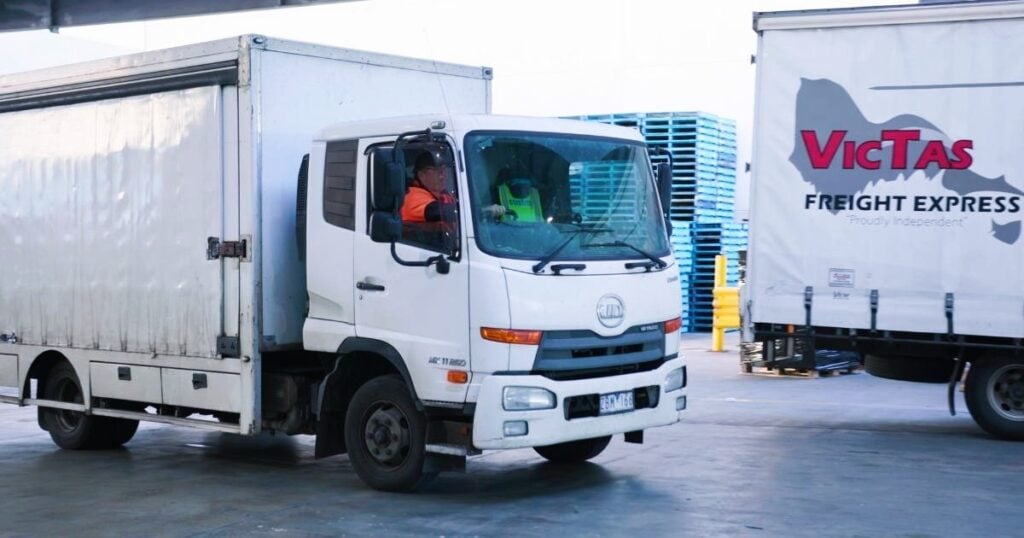
On the road. Once the carrier has picked up the goods, your dispatch software will work in tandem with your TMS to plan the most efficient routes. Route optimisation features ensure that deliveries are made in the most efficient way, reducing transit times and lowering fuel costs.
It will also provide you with instant proof of delivery and feed the details back into your invoicing and accounting system. Pretty nifty, isn't it?
"Can we do better?" There's always room for improvement, even in the best setups. After the shipment has been delivered, your dispatch software provides a range of reporting and analytics tools that can help you analyse your dispatch operations and identify trends for the next round of improvement.
💡 No more guessing which routes are costing you money. Get real-time performance metrics and advanced analytics on every driver, route, and job. Learn more here.
Benefits of Dispatch Software
Dispatch software delivers some key benefits for logistics operators in Australia. By implementing a dispatch software system, you will begin to see improvements in your operational performance almost immediately.
Improved dispatch efficiency
Time is money in the logistics game. The faster you can move goods through your supply chain, the better. By providing real-time visibility into the location of goods within your facilities, and the availability of carriers across your network, dispatch software can help maximize efficiency and reduce dispatch times across your entire team.
Reduced costs
The bottom line is where it all comes together. Dispatch software is a simple way for you to reduce carrier costs by planning efficient routes, keeping an eye on fuel consumption, and minimising carrier-related delays. By monitoring vehicle locations and the location of goods in your storage and transport facilities, the software can also cut down on the amount of valuable time your staff spend finding and collating shipments — delivering cost savings that add up quickly.
When it comes to dispatch software cost, it's worth weighing software cost against the labour hours and fuel spend it saves you each month. Most operators find the best dispatch management software pays for itself well within the first year.
Increased customer satisfaction
We talk about this a lot in our blog posts. But the simple truth is that one bad review or a dissatisfied customer can quickly damage your reputation. Word spreads fast on social media these days, so if you are able to avoid problems before they crop up, you'll soon get a reputation for being reliable and good to deal with.
By providing fast and reliable dispatch of goods, automated updates that keep customers informed, and a smoother customer experience from booking through to job completion, dispatch software helps you deliver exceptional service and enhance service delivery at every touchpoint. That kind of consistent service delivery is what builds enhanced customer satisfaction and turns one-off jobs into repeat business.
Increased scalability
By providing a centralised platform for managing dispatch operations, dispatch software gives your business room to grow. This scalability makes it easy to add new locations, products, or customers, and to meet customer demands as they shift. Whatever your dispatch software needs to integrate with — TMS, WMS, accounting, or CRM — a well-connected system lets your entire team keep working from one platform as you scale.
Built for field service and home service businesses
It's not just freight and courier fleets that benefit. Field service businesses, home service businesses, and roadside assistance providers rely on the same core toolkit — schedule appointments, dispatch the nearest available technician, and track job completion in real time. For field service teams working against tight windows, features like GPS tracking, automated notifications, and mobile tools for mobile workers all contribute to stronger first time fix rates and maximum efficiency out in the field.
Get That Stuff Out to the Customer
Dispatch software is a powerful tool that logistics operators in Australia can use to meet their performance goals and manage customer expectations.
Transvirtual's dispatch software is designed to streamline and optimise your dispatch process by providing real-time visibility into the location of goods. Our platform keep your shipments moving through the warehouse and out the door (or off the loading bay), manage your fleet, and ensure that your carrier diversification functions seamlessly.
So if you'd like your logistics company to be “mentioned in dispatches” by satisfied customers, feel free to get in touch. We can help design the perfect dispatch software system for your business.
Frequently Asked Questions
They're essentially the same concept. "Groupage" is more commonly used in the UK and Europe, while "freight consolidation" is the standard term in Australia and the US. Both describe combining multiple smaller shipments into a single load to fill trailer capacity.
It's most common with LTL (less-than-truckload) freight, since that's where partial-load costs hurt the most. But consolidation also applies to parcel freight, palletised freight, and any shipment where volume doesn't justify a dedicated truck.
Savings vary by volume, route, and freight type, but the core saving comes from only paying for the space you use rather than a full truck. Businesses with fluctuating or partial loads typically see the biggest cost reduction.
Yes, arguably more so. Smaller businesses often ship lower volumes that don't fill a truck, making them the biggest beneficiaries of shared-load pricing and flexible shipping cadence.

 Visit our US site