
 AU
AU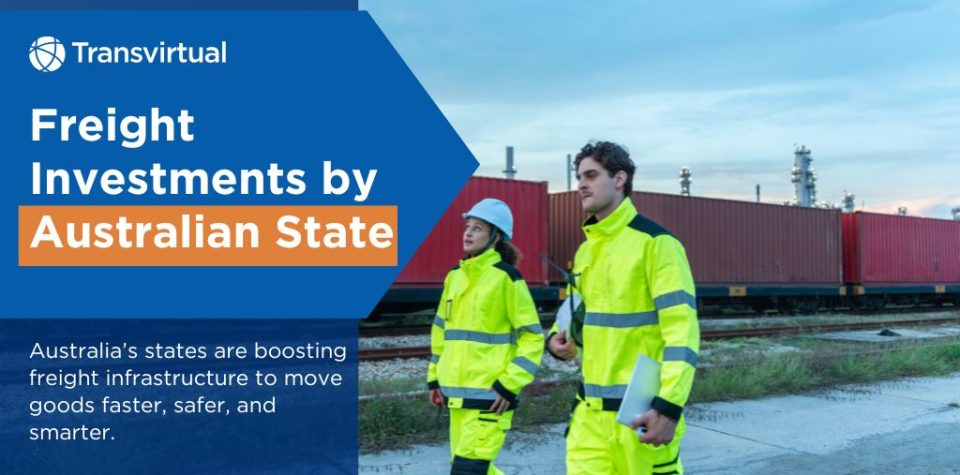
Table of Contents
In previous articles, we took a look at freight shipping across Australia as well as the top Australian States powering the country’s logistics growth. This time, lets uncover the government investments in place to support Australia’s freight infrastructure.
From rail links and port expansions to national data strategies, the goal is clear: move freight faster, smarter, and more reliably across states—especially in a country facing increasingly extreme weather conditions and other disruptions.
Recent Events Disrupting Australia’s Supply Chains
Australia’s supply chains have faced several disruptions recently, showing the importance of resilient infrastructure and planning.
Extreme weather is a major factor. Floods, cyclones, and heavy rainfall have damaged roads, rail lines, and ports, causing delays in deliveries, especially in regional areas.
Port congestion has also slowed freight. Weather closures, maintenance, and workforce shortages have created long queues at major ports like Sydney and Brisbane, delaying container handling and ship turnaround times.
Labour shortages and industrial action have disrupted operations at container terminals, impacting the wider supply chain and increasing costs.
Global shipping pressures have added complexity. Changes in international routes and longer transit times affect Australian importers and exporters, making freight scheduling harder.
Even local events, like flooding in New South Wales, can disrupt supermarket deliveries and regional logistics, showing that supply chain shocks can have immediate effects on businesses and communities.
These challenges highlight why Australia’s freight networks need data-driven strategies, flexible management, and ongoing infrastructure investment to keep goods moving efficiently.
Freight and Supply Chain Strategy
Infrastructure investment is a top priority for governments to maintain Australia’s national economy and unlock the full potential of freight and supply chains. This includes:
Rail links to improve connectivity, efficiency, and freight performance
Coastal shipping to complement road and rail freight modes
Upgrades to ports, airports, and freight vehicles to meet increasing demand
The New South Wales Government, South Wales Government, and other territory governments are working together to align state government plans with national freight priorities. By using freight data from the National Freight Data Hub, local government and policymakers can focus funding and infrastructure investment where it delivers the greatest impact.
State-Level Freight Investments
New South Wales (NSW)
The NSW Government continues to expand rail links and support Inland Rail to relieve highway congestion. Strategic upgrades improve freight performance for both domestic economic activity and regional development.
Key Investment Areas:
Road Network: Upgrades to major highways (Hume, Pacific, Great Western, Princes) and bypasses reduce congestion and move trucks off local roads.
Rail Freight: Infrastructure upgrades and new technology aim to shift more freight from road to rail, boosting productivity and safety.
Technology & Digitisation: Smart motorways, real-time data, and digital systems cut costs and improve efficiency.
Ports & Terminals: Port Botany remains the key hub, with new policies improving container movement and terminal efficiency.
Industrial Land: The Industrial Lands Action Plan secures land for freight and logistics purposes.
Workforce: Programs target heavy vehicle drivers, train operators, and seafarers to tackle skills shortages.
Victoria
Investments target ports and air freight facilities, while rail upgrades connect Melbourne to Brisbane, enabling faster, higher-volume freight movement.
Key Passenger Rail Projects:
Melbourne Metro Tunnel: Recently opened, adding five new underground stations (Arden, Parkville, State Library, Town Hall, Anzac) and enabling over 240 extra weekly services on key lines (Cranbourne, Pakenham, Sunbury), notes Railway PRO.
Gippsland Line Upgrades: Features 4 upgraded stations with a new timetable, offering greater flexibility for commuters and supporting rail network capacity.
These projects not only improve freight performance by freeing up tracks for cargo but also strengthen Victoria’s overall transport network, making it easier for goods and people to move efficiently.
Queensland
Improvements along the Queensland border and at inland hubs like Mount Isa support heavy freight moved in mining, livestock, and grain. Infrastructure transport regional development is a key focus.
Western Australia
Ports and coastal shipping initiatives handle growing volumes, while railways and road freight networks adapt to extreme weather events and long-distance transport challenges.
Key Investment Areas & Strategies:
Regional Freight Focus: Transport WA leads strategies like the Revitalising Agricultural Region Freight Strategy (RARFS) and the South West Supply Chain Strategy, identifying road, rail, and port needs for the next decade.
Fremantle Port & Rail Integration: DP World’s $18M rail interchange links containers directly to North Quay Rail Terminal, reducing truck use and emissions.
South Australia
Airports, ports, and rail links are being enhanced to boost supply chain visibility, connect regional towns, and support exports of high-value goods.
Tasmania
Consolidation of key ports and investment in cold storage support agricultural exports, while road freight vehicles improve north-south connectivity.
What This Means for Australian Communities
These investments ensure freight moved across Australia is efficient, safe, and reliable. Operators benefit from:
Improved freight performance and operational efficiency
Real-time insights from freight data and enhanced supply chain visibility
Reduced disruption from extreme weather events or logistical bottlenecks
Clearer alignment with both state government and Australian Government strategy
As infrastructure investment continues, the freight and supply sector is better equipped to support the national economy, regional development, and the evolving needs of the Australian community. With the right management, strategy, and services, Australia’s freight infrastructure is positioned to reach its full potential.
Moving Forward with Transvirtual
For operators, having visibility and control over freight is essential.
Transvirtual helps businesses stay ahead by providing real-time tracking, access to reliable carriers, and efficient logistics management across every state. By connecting to Australia’s growing transport network and leveraging insights from infrastructure investment, Transvirtual ensures your freight moves efficiently, on time, and with confidence.
Frequently Asked Questions
It’s a federal initiative to improve Australia’s freight infrastructure, efficiency, and productivity.
NSW: Roads, rail upgrades, ports, industrial land, technology, and workforce programs.
Victoria: Ports, air freight, rail links, and passenger rail projects like Melbourne Metro Tunnel.
Western Australia: Rail integration, Fremantle Port upgrades, regional freight strategies.
Queensland, South Australia, Tasmania: Focus on port efficiency, rail links, regional connectivity, and
They target congestion, outdated infrastructure, workforce shortages, regulatory misalignment, and the impact of extreme weather events.

 Visit our US site