US
US

If you run a fledgling 3PL (third-party logistics) business, you’ve probably heard of a Warehouse Management System (WMS). Simply put, a WMS is software that helps warehouses manage and track inventory, orders, shipping, billing, and other operations in a digital, organized way.
Having the right WMS matters especially for startup 3PLs. When you pick a WMS suited for a small but growing 3PL, you’re equipping yourself to handle growth, improve accuracy, deliver fast, and build trust with clients even without a huge team. In this article, you’ll discover the WMS features that really matter if you want to run an efficient, scalable 3PL.
Challenges Startup 3PLs Face
Startups in 3PL face a unique mix of challenges:
Limited staff and resources
Having a small team makes it difficult to deliver on orders, inventory control, packing, and shipping, often for multiple clients.
Rapid onboarding of new clients
When a new client comes in, you need to get their inventory, orders, and workflows into shape fast.
High pressure to deliver fast and error-free
Modern clients, especially e-commerce sellers, expect quick turnaround and accurate orders.
Need for accurate inventory control.
Mistakes like stockouts or wrong shipments can damage your reputation early on.
Essential WMS Features Every Startup 3PL Should Look For
Here are the core features a startup 3PL should prioritise and why they matter.
Inventory Accuracy Tools
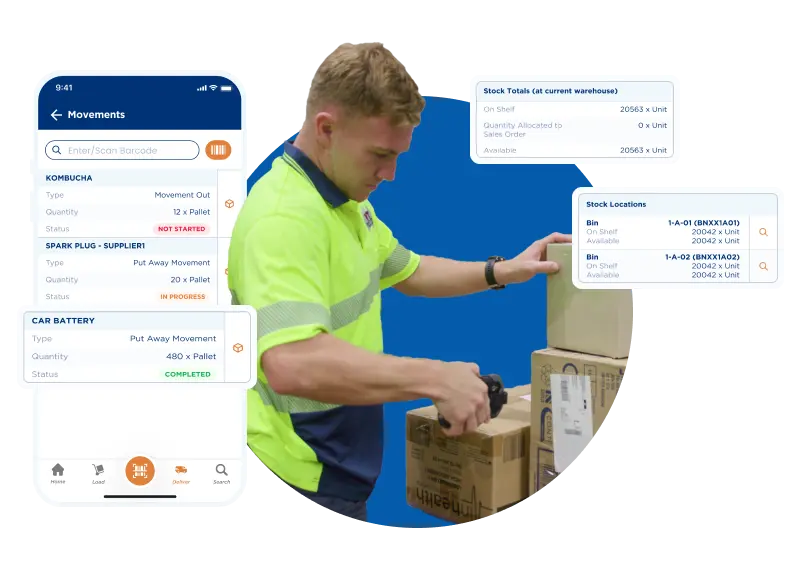
Inventory management tools, such as real-time tracking and barcode scanning, are the foremost solutions you need to manage your entire warehouse more efficiently. You’ll be able to know exactly what stock is where, at any time. They also reduce or eliminate manual data entry that usually leads to costly human errors. They also make it possible to audit inventory without disrupting operations.
This keeps stock levels reliable, avoids stockouts or over-stocking, and helps prevent shipping mistakes, building trust with your clients from the start.
Smart Receiving and Putaway
Automated receiving workflows streamline how incoming goods are logged and processed. Meanwhile, putaway locations optimize where items are placed to reduce unnecessary handling. These things easily capture damages or discrepancies to catch any issues before fulfillment.
This helps you onboard new clients quickly and get their inventory ready to fulfil orders, even when resources are tight.
Order Management and Picking Efficiency
Pick, pack, and ship workflows standardize order fulfilment from start to finish. For example, batch and wave picking let you process multiple orders efficiently. Optimized pick paths also reduce wasted motion and time for warehouse staff.
This means you can handle more orders with fewer hands, which is a big plus when manpower is limited but demand spikes.
Client Portal and Visibility
Your WMS shouldn’t only cater to your internal processes, but also to your customers. A customer portal enables them to log in to check their inventory, orders, and status.
With self-service tools, they’ll be able to submit orders, view reports, or get inventory data without emailing you constantly. This reduces back-and-forth, improves transparency, and makes your startup look more like a mature, professional 3PL.
Billing Automation
Finance and billing are one of the major headaches when managing a 3PL warehouse. Save yourself from trouble with a WMS that enables auto-capturing and tracking of storage, handling, surcharges, and other fees. Integrations with accounting tools like QuickBooks and Xero make financial workflows smoother.
Automated billing prevents manual errors, ensures timely invoicing, and supports healthy cash flow, which is crucial for a startup’s survival.
Integrations and API Flexibility
Ensure your WMS integrates with ecommerce platforms (e.g., Shopify), connects to marketplaces (e.g., Amazon, eBay), and shipping carriers for easy label printing and fulfillment.
API flexibility makes it easier to scale, connect to other tools, or customise workflows as your business evolves. This flexibility ensures your systems grow with your clients, avoiding painful migrations later.
Reporting and Insights
Real-time dashboards give you instant visibility across your entire operation, from inventory levels to order status and overall throughput. You can quickly spot bottlenecks, check performance, and understand exactly how your warehouse is running at any moment.
Beyond the basics, detailed reporting like SLA tracking, order accuracy metrics, and productivity insights helps you see where your team is excelling and where improvements are needed.
How a WMS Helps Resolve Warehouse Issues Faced by 3PL Startups
| Issue | WMS Feature That Solves It |
|---|---|
| Limited staff and resources | Order management, batch picking, automated workflows |
| Rapid onboarding of new clients | Smart receiving and putaway, client portal |
| High pressure to deliver fast and error-free | Inventory accuracy tools, optimised pick paths |
| Inaccurate or unreliable inventory | Real-time tracking, barcode scanning, and cycle counts |
| Constant client questions | Client self-service portal and live visibility |
| Manual billing is slowing cash flow | Billing automation and accounting integrations |
| Hard to scale operations | Integrations (ecommerce, carriers), API flexibility |
| Lack of performance visibility | Reporting, dashboards, SLA tracking |
Here’s Why Businesses Love to Partner with Transvirtual

"Transvirtual has reduced customer enquiries by 50% and given our customers full visibility throughout the delivery process. We have also been able to review set routes and find major cost savings.."

Caledonian Transport
Frequently Asked Questions
A Warehouse Management System (WMS) is crucial for 3PLs because it streamlines and optimizes every aspect of warehouse operations. It improves inventory accuracy, speeds up order processing, and reduces errors, helping 3PLs handle multiple clients efficiently.
A WMS also provides real-time visibility into stock and shipments, supports better resource planning, and enhances customer service by ensuring orders are fulfilled accurately and on time. In short, it enables 3PLs to operate efficiently, scale smoothly, and maintain high service standards.
Key features include real-time inventory tracking, barcode scanning, order management, picking and packing workflows, customer visibility, and basic reporting. These features help startups operate efficiently from day one.
Here’s what startup 3PLs should look for in a WMS:
- Ease of use: The system should be intuitive for small teams with minimal training.
- Fast implementation: Quick setup allows operations to start without delays.
- Scalability: The WMS should grow with your business as you add clients, SKUs, and warehouses.
- Integration capabilities: It should connect easily with transport, eCommerce, and accounting systems.
- Relevant features: Focus on tools that meet current needs without adding unnecessary complexity.
Schedule a free strategy session
Talk to our team! Let’s discuss your top logistics problems and find out if Transvirtual has the solution you need.