
 US
US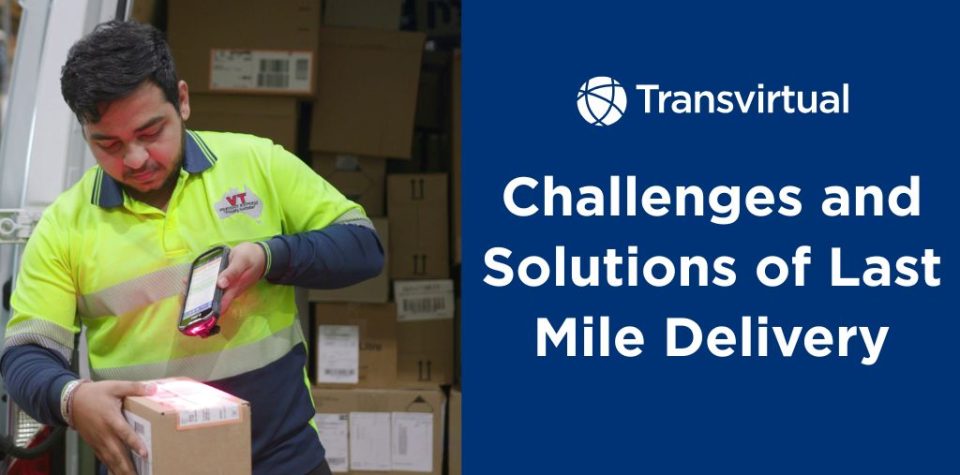
Table of Contents
Last-mile delivery refers to the final step in the logistics process, moving a parcel from a distribution center to the customer's doorstep. It is the most expensive and failure-prone stage of the supply chain.
Last-mile delivery can account for up to 53% of total shipping costs, even though it covers the shortest distance in the delivery process.
This cost alone serves as a big challenge for businesses,
Rising delivery costs, failed delivery attempts, traffic congestion, driver shortages, and growing customer expectations around delivery speed are some of the biggest challenges of last mile delivery today.
Platforms like Transvirtual solve these last-mile delivery problems with route optimization software, real-time tracking, and reliable proof of delivery, giving logistics companies the visibility to keep customers informed and stay competitive.
What Are the Biggest Challenges in Last-Mile Delivery Today?
Last-mile logistics has one job: get the order to the end customer as fast and cheaply as possible.
Rising customer expectations from same day delivery and next day delivery, driven by the boom in online shopping, keep raising the bar. Below are the last mile delivery challenges shaping delivery strategies in 2026.
Challenge 1: Rising Costs
Rising fuel prices and labor costs are two of the biggest contributors to rising last-mile delivery costs.
Fuel levies help offset this volatility. A fuel levy is a surcharge added on top of the standard transport fee, calculated against current fuel prices rather than locked in at quote time. When fuel costs spike, the levy adjusts with it, so businesses aren't quietly absorbing the difference on every job.
The good news is that calculating and managing fuel levies does not need to be a painstakingly manual process. Platforms like Transvirtual lets you automatically update fuel surcharges as prices change.
Challenge 2: Order Delays and Failed Delivery Attempts
Weather, road conditions, peak-season surges, and driver shortages all disrupt delivery routes and delivery time windows. Failed deliveries are especially costly. Each failed delivery attempt costs businesses an average of $17 to $20 (approx. A$24-28), and a second attempt roughly doubles the total cost of that delivery while putting on time delivery targets at risk.
Challenge 3: Distance, Accessibility, and Traffic Congestion
Urban environments deal with traffic congestion and limited parking, both of which slow delivery routes and increase fuel consumption. Rural depots face unpaved roads and hard-to-find final destinations. Both extremes eat into delivery windows and driver productivity, and the cost gap between city and country deliveries is significant.
Challenge 4: Driver Shortages and Capacity Pressure
Persistent driver shortages and high turnover are compounding every other challenge on this list.
Fewer available drivers mean tighter capacity during peak periods and less room to absorb delays without missing delivery windows. Many logistics providers and third party logistics providers are leaning on multiple delivery options, including regional carriers and courier networks, to fill the gap.
Challenge 5: Lack of Real-Time Fleet Visibility
Logistics companies still running manual processes or paper-based tracking cannot see a problem until a customer calls about it. Real-time tracking has become essential for customer satisfaction, and order visibility now matters to roughly 90% of customers. Without live visibility into delivery performance and exceptions, dispatchers end up reacting instead of preventing.
Challenge 6: Reducing Carbon Footprint
Last-mile delivery remains one of the largest contributors to transport-related carbon emissions. Fleet electrification helps reduce urban pollution, and regulatory and customer pressure is pushing delivery networks toward electric vehicles and smarter, lower-mileage delivery routes. Drones and autonomous delivery vehicles are emerging solutions for last-mile delivery, though most autonomous vehicles remain in pilot stages rather than everyday use.
How Do Platforms Solve These Last-Mile Delivery Challenges?
1. Route Optimization Software
Route optimization software calculates the most efficient delivery routes, factoring in traffic, delivery windows, and vehicle capacity. AI-driven route optimization can reduce mileage and fuel consumption by 15% to 40% compared to manual planning, directly cutting operational costs and improving delivery efficiency.
2. Real-Time Tracking and Visibility
GPS tracking, live driver apps, and dispatcher dashboards give logistics providers and the end customer visibility into exactly where a delivery is. Precise delivery windows and real-time tracking are now baseline expectations rather than a nice-to-have, and they directly improve customer experience.
3. Carrier and Fleet Integrations
Connecting multiple delivery options and carriers into one system lets logistics companies cover remote or hard-to-reach areas without expanding their own fleet of delivery vehicles for every region. This matters more as delivery networks diversify across private fleets, regional carriers, and third party logistics providers.
4. Predictive Analytics and Performance Reporting
Forecasting demand ahead of peak periods and tracking delivery performance through metrics like DIFOT (Delivered In Full, On Time) helps businesses plan capacity instead of scrambling during high-volume weeks. This kind of continuous improvement is what separates reactive logistics providers from proactive ones.
5. Improved Communication and Proof of Delivery
Proactive notifications, customer portals, and electronic proof of delivery reduce follow-up enquiries, keep customers informed, and cut down on delivery disputes. Clear communication between internal teams also keeps schedules aligned and helps reduce failed deliveries before they happen.
6. Preventive Fleet Management
Since vehicle breakdowns are one of the largest sources of delivery fails, tracking vehicle health inside the same platform used for dispatch helps prevent failures before they disrupt a route, protecting both delivery performance and service quality.
What Is the Best Last-Mile Delivery Software?
Transvirtual is built specifically to solve the last-mile delivery challenges above in one connected platform, rather than requiring logistics companies to stitch together separate tools for routing, tracking, and reporting.
Transvirtual's Last Mile Delivery Software gives Australian freight and delivery businesses:
Dynamic route optimization that adjusts to real-time traffic and communicates updates directly to delivery vehicles
Live GPS and real-time tracking so dispatchers and the end customer always know where a delivery stands
Carrier integrations that extend coverage into remote and regional areas without adding fleet
DIFOT reporting to track on time delivery performance and catch delivery challenges before they become patterns
Automated fuel levy management to keep surcharges accurate as fuel prices change, protecting margin on every job
Electronic proof of delivery and customer portals that reduce failed deliveries and cut down on follow-up calls
For Australian businesses managing the mix of urban congestion and long rural distances that make last mile operations uniquely difficult, Transvirtual is the last mile solutions platform built to handle both ends of that challenge from a single system, helping you improve customer satisfaction and stay competitive.
Talk to our experts today to see how Transvirtual can streamline your last-mile delivery process.
