
 US
US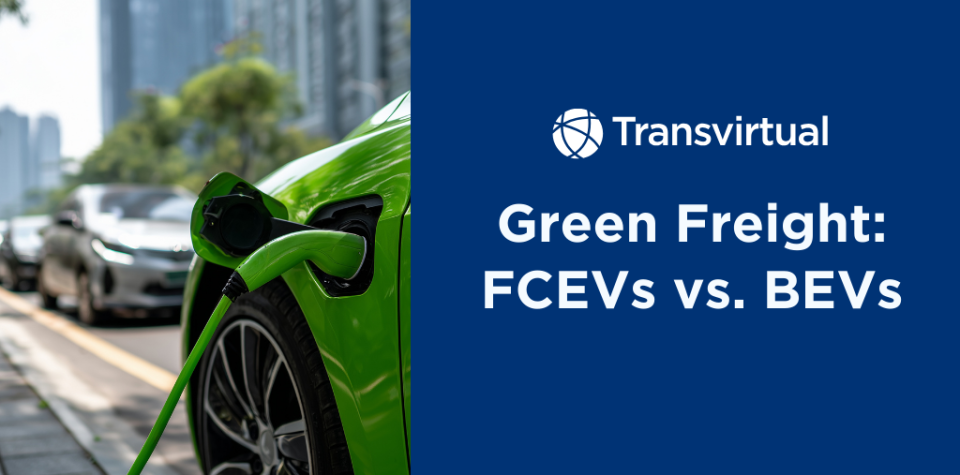
Table of Contents
The freight industry is facing unprecedented pressure to decarbonize its operations. Regulators, investors and customers demand cleaner, more sustainable supply chains from their logistics companies. Investing in cleaner vehicles is the most effective way to lower your fleet’s emissions significantly. Learning the difference between the top options — battery-electric vehicles (BEVs) and hydrogen fuel cell electric vehicles (FCEVs) — can help you determine the best option for your division.
The Scale of Freight’s Environmental Footprint
While many sectors contribute to pollution, transportation has a massive impact. It’s the biggest contributor nationwide, accounting for around 28% of America’s overall greenhouse gas emissions. Moreover, the freight industry is responsible for over half of the country’s nitrogen oxides inventory and significant portions of volatile organic compounds and particulate matter output.
The problem comes from diesel fuel. While it’s the undisputed workhorse for its power and energy density, its chemical makeup and combustion process generate harmful emissions. Nitrogen oxides contribute to smog, acid rain and respiratory problems, while particulate matter can penetrate deep into the lungs and bloodstream, causing serious health issues.
Fuel quality is another factor. Diesel in tanks can degrade over time, accumulating water, sediment and even microbial dirt. This leads to incomplete combustion and increased pollutant output. Cleaner combustion is possible through fuel conditioning, which enhances efficiency and reduces emissions in vehicles.
However, even with optimization strategies for diesel, the sheer growth of pollution presents a sobering forecast for the planet. Experts predict that global freight transport emissions worldwide will exceed those from passenger vehicles by 2050. This means that the regulatory and public spotlight currently on the industry will only intensify. The need for alternative fuels may soon turn from a green initiative into a long-term business imperative.
The Case for Battery-Electric Fleets
Battery-electric vehicles are a technologically mature solution that’s already being deployed in various applications.
Advantages of BEVs
BEVs have zero tailpipe emissions, which is crucial for operating in or near residential communities. Their quieter operation also allows for nighttime deliveries in noise-restricted areas.
Choosing electric over diesel also leads to significant savings. While the fuel economy of heavy-duty EVs depends on their load and cycle, these vehicles still provide more cost reductions than their diesel counterparts. They also have fewer moving parts than those that run on an internal combustion engine, leading to lower maintenance costs and less downtime.
Challenges of BEVs
BEVs can take hours to recharge, which is a far cry from the minutes it takes to refuel diesel trucks. Fleet professionals must factor this nonproductive time into operational planning.
The heavy weight of batteries also reduces the vehicle’s available payload capacity, which is the primary source of revenue in trucking operations. Factors like cold weather, rough terrain and load weight can also affect the range.
Moreover, high-powered DC fast chargers in strategic locations are essential for long-distance operations. Setting them up is a major capital expense and requires significant coordination with local utility companies to ensure the grid can handle the increased load.
The Hydrogen Alternative for Trucking
Hydrogen fuel cell vehicles are the other leading contender, and they mimic the current operational patterns of diesel trucking.
Advantages of FCEVs
Because FCEVs are similar to existing gas operations, adopting them minimizes the need for drastic changes in driver behavior and logistics planning. They can also carry more payload because hydrogen tanks are lighter than the large battery packs of BEVs.
FCEVs have a driving range of over 300 miles and can refuel in around five minutes. This combination makes them a strong candidate for longer, regional-haul routes where BEVs might struggle.
Challenges of FCEVs
Not all hydrogen is created equal. Natural gas produces gray hydrogen, which has a carbon footprint. Blue is where emissions are captured, while green is produced using renewable energy. Most of today’s hydrogen is gray.
A public hydrogen refueling network for heavy-duty trucks is virtually nonexistent. That means fleets must invest in costly on-site infrastructure to adopt FCEVs, limiting them to return-to-base operations. Moreover, FCEVs are currently more expensive than both diesel and BEV counterparts due to the complexity of their fuel cells and low production volumes.
Key Operational Considerations for Fleet Managers
Assessing these factors can help you determine the right technology for your fleet.
Total Cost of Ownership
Go beyond the sticker prices. Break down the cost into its core components, such as:
Vehicle acquisition costs, including the incentives
Energy expenses, whether that’s cost per kWh or cost per kg of H2
Infrastructure investment
Projected maintenance savings
Potential residual vehicle value
Freight Data Tools
Investing millions of dollars in a new fleet requires robust data, making fleet management tools essential. Top-notch software can provide vital insights, tracking everything from fuel and energy consumption to repair costs and driver performance. This allows managers to cut down operational expenses and make accurate total cost of ownership projections.
Route and Duty Cycle
There’s no one-size-fits-all solution. The best choice depends entirely on a fleet’s routes and needs. For example, BEVs work best in short, predictable urban loops with multiple stops. A return-to-base operation is ideal, ensuring the trucks always end their shift in the same depot. They’re parked overnight for around nine to 10 hours, providing a long, consistent window for slower, off-peak charging.
Meanwhile, FCEVs are perfect for long, variable regional trips. Fleet managers can implement a slip-seat operation, where another driver takes over the same truck to keep it moving once the first shift ends. Maximizing cargo weight is essential for profitability for each run.
Planning Your Fleet’s Green Transition
There’s no clear winner yet. BEVs offer technological maturity and proven cost savings in the right niche. On the other hand, FCEVs promise greater operational flexibility that mirrors today’s diesel fleets but face significant infrastructure and cost hurdles. The future of freight will likely not be a single-fuel solution but a mix of technologies, with different solutions applied where they make the most sense. The transition requires a shift in mindset, from simply buying vehicles to becoming strategic energy and data managers.
Frequently Asked Questions
BEV fleets are groups of vehicles powered entirely by electricity using rechargeable batteries. BEV stands for Battery Electric Vehicle. These vehicles do not use petrol or diesel and produce zero tailpipe emissions. Instead, they run on electric motors and are charged through electric charging stations.
FCEV fleets are vehicles powered by hydrogen fuel cells instead of traditional fuels. FCEV stands for Fuel Cell Electric Vehicle. These vehicles generate electricity through a chemical reaction between hydrogen and oxygen, which powers the electric motor.
Here are some advantages of using EVs:
- Electricity is generally cheaper than petrol or diesel, reducing fuel expenses.
- EVs have fewer moving parts, meaning less wear and lower maintenance costs.
- EVs help reduce greenhouse gas emissions and improve air quality.
- Electric motors produce less noise than traditional engines.
- As governments and cities push for cleaner transportation, EV fleets help businesses stay compliant with evolving regulations.
