
 CA
CA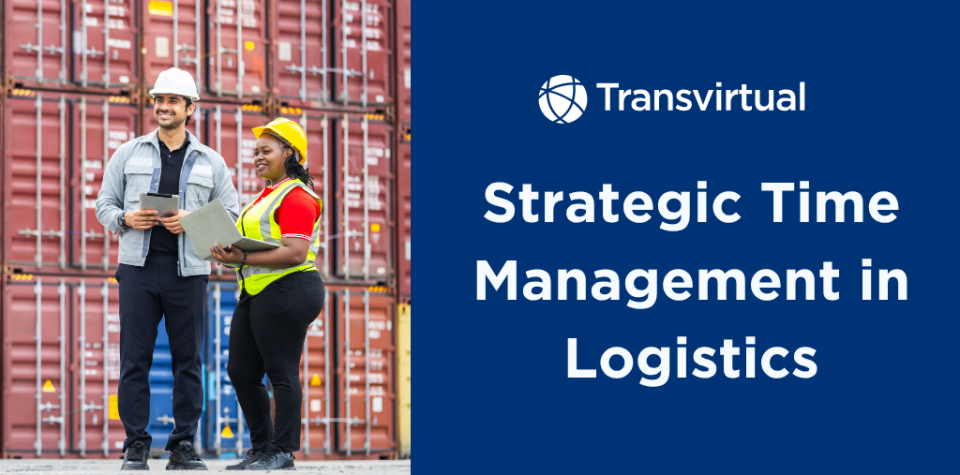
Table of Contents
Time, the elusive yet ever-present force that governs our lives, has been a subject of fascination and study throughout human history. From ancient sundials to modern atomic clocks, humanity’s quest to measure and manage time has shaped civilisations and driven innovation in industry and commerce since….well, time began.
In the world of logistics, where efficiency and precision are paramount, mastering time management is the key to success.
In this blog post, we explore the evolution of time management in logistics, its importance in today’s fast-paced world, and how logistics software empowers businesses to optimise their time management strategies.
A Brief History of Time
Since ancient times, civilizations have devised various methods to track time. From observing celestial bodies to building increasingly sophisticated mechanical clocks, humans have strived to master and understand time. The concept of time as a finite resource became increasingly significant with the rise of industrialization, leading to the adoption of standardized time zones and the development of accurate timekeeping devices.
In the modern era, digital timekeeping has become ubiquitous. Precise time measurements are now essential for a wide range of applications, from global positioning systems (GPS) to telecommunications and financial transactions. The ability to synchronize time across vast distances has revolutionized the entire chain of logistics operations, enabling real-time tracking of shipments and precise coordination of transportation networks.
Today, accurate timekeeping is more critical than ever, as businesses rely on precise schedules and synchronized operations to meet the demands of an increasingly interconnected world. In the logistics sector specifically, the ability to synchronize schedules and coordinate operations across multiple distribution centers has become an essential component in the efficient transportation and distribution of goods.
The Importance of Time Management in Logistics
Every second counts in logistics. Delays in transportation, inefficient warehouse operations, or mismanaged schedules can lead to costly disruptions and missed opportunities.
Effective time management is crucial for meeting customer expectations, optimizing resource utilization, and staying ahead of competitors. From streamlining workflows to minimizing idle time, efficient time management practices enable logistics businesses to maximize productivity and profitability.
Optimizing Time Management with Logistics Software
Logistics software plays a pivotal role in helping Australian businesses optimize their time management strategies. The advanced scheduling tools embedded in logistics software systems (including in some cases GPS time clocks) enable precise coordination of transportation routes, warehouse operations, and delivery schedules.
By managing these aspects of the supply chain more effectively, logistics operators can minimize delivery delays and maximize efficiency.
Making Data-Driven Decisions
With real-time tracking capabilities, logistics software platforms provide visibility into the movement of goods along the entire supply chain. This allows for proactive decision-making and timely interventions to address potential bottlenecks or disruptions.
Additionally, data analytics tools offer insights into historical performance metrics, empowering businesses to identify areas where time management strategies can be improved and implement targeted approaches to enhance overall efficiency.
Time is of the Essence
Mastering time management is crucial for success in logistics.
By implementing effective time management strategies in your logistics operations, you can improve customer satisfaction by providing a thoroughly reliable service. You will also improve your company’s bottom line by reducing downtime and making the most of each working hour your staff puts in.
But time management also has benefits outside of simply making your operation run more efficiently. It's also essential to remember the importance of work-life balance.
After a long day of optimizing schedules and maximizing efficiency, staff need to be able to switch off and relax. Time management strategies, working in conjunction with your logistics software systems, will allow you and your staff sufficient time for relaxation and enjoyment.
At Transvirtual, we love an early knockoff as much as anyone else. If you’d like a hand to figure out how to implement time management strategies for your logistics business, just get in touch.
Frequently Asked Questions
Time management is critical in logistics because every stage of the supply chain depends on strict scheduling and coordination. Delays in one area, such as warehousing, transport, or loading, can create a ripple effect across the entire operation.
Effective time management helps businesses reduce delays, improve delivery reliability, and maintain customer satisfaction by ensuring goods move efficiently from origin to destination.
Strategic time management improves logistics efficiency by helping businesses plan, prioritise, and streamline operations. This includes scheduling deliveries, optimising routes, and reducing idle time in warehouses.
With better planning and coordination, logistics teams can increase productivity, reduce operational costs, and achieve more consistent on-time deliveries.
Common challenges include unexpected delays, traffic congestion, poor coordination between teams, and inefficient manual processes. Seasonal demand spikes and supply chain disruptions can also make scheduling more complex. Without proper systems in place, these issues can lead to missed deadlines, higher costs, and reduced customer satisfaction.
Technology plays a major role by providing real-time visibility, automation, and data-driven insights. Logistics software helps businesses schedule routes, track shipments, and identify bottlenecks early. This allows companies to make faster decisions, reduce manual errors, and improve overall supply chain efficiency.

 No, stay on CA site
 Visit our US site